Common Transport Abbreviations Explained (ETA, ETD, POD, CMR & More)
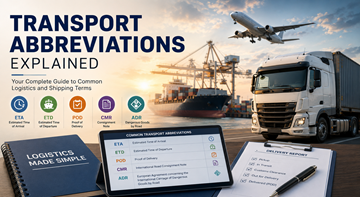
This guide explains the most important transport abbreviations and logistics acronyms used in road transport, freight forwarding, warehousing, customs, ADR transport, air cargo, and international shipping operations.
Why Transport Abbreviations Are Important

Transport companies, warehouses, freight forwarders, and customs agents communicate quickly using standard abbreviations. These short terms simplify operations and reduce long explanations in documents and shipment systems.
- Faster communication between logistics partners
- Standardized transport documentation
- Easier shipment tracking and status updates
- Better coordination between drivers and dispatchers
- Reduced misunderstandings in international transport
- Improved efficiency in warehouse and customs operations
Most transport abbreviations are internationally recognized, especially across Europe. Understanding them helps businesses manage deliveries, avoid confusion, and communicate professionally with transport partners.
Common Delivery and Tracking Abbreviations
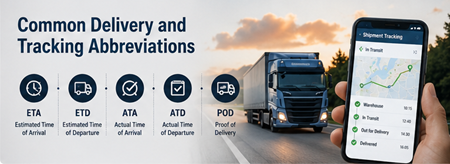
Delivery and shipment tracking systems use many abbreviations to show shipment progress, estimated arrival times, and delivery confirmation statuses.
- ETA — Estimated Time of Arrival
- ETD — Estimated Time of Departure
- ATA — Actual Time of Arrival
- ATD — Actual Time of Departure
- POD — Proof of Delivery
- COD — Cash on Delivery
- RTD — Ready to Dispatch
- DTD — Door to Door
- PTA — Planned Time of Arrival
- OTS — On Time Shipment
These abbreviations are commonly visible in tracking systems, mobile logistics apps, transport marketplaces, and customer notifications.
Road Transport and Freight Abbreviations
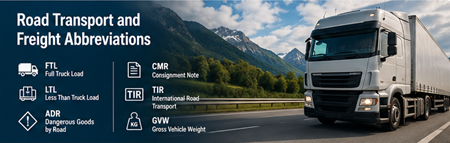
Road freight transport uses specialized abbreviations for shipment types, transport methods, and cargo handling operations.
- FTL — Full Truck Load
- LTL — Less Than Truck Load
- ADR — European Agreement concerning the International Carriage of Dangerous Goods by Road
- TIR — International Road Transport System
- CMR — International Road Consignment Note
- GVW — Gross Vehicle Weight
- ULD — Unit Load Device
- HGV — Heavy Goods Vehicle
- LGV — Light Goods Vehicle
- OOG — Out of Gauge Cargo
These abbreviations are essential for carriers, dispatchers, logistics planners, and warehouse coordinators working with European road transport operations.
Warehouse and Logistics Abbreviations

Warehouses and logistics centers use abbreviations to simplify inventory control, shipment processing, and supply chain operations.
- WMS — Warehouse Management System
- SKU — Stock Keeping Unit
- FIFO — First In First Out
- LIFO — Last In First Out
- DC — Distribution Center
- 3PL — Third Party Logistics
- 4PL — Fourth Party Logistics
- RFID — Radio Frequency Identification
- ASN — Advanced Shipping Notice
- BOL — Bill of Lading
Understanding warehouse abbreviations improves communication between warehouses, carriers, and customers during storage and delivery operations.
Customs and International Shipping Abbreviations
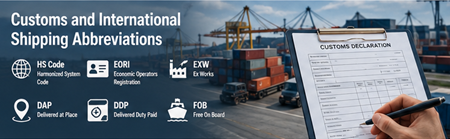
International transport and customs procedures require many abbreviations related to trade, export, import, and cross-border freight documentation.
- HS Code — Harmonized System Code
- EORI — Economic Operators Registration and Identification
- EXW — Ex Works
- DAP — Delivered at Place
- DDP — Delivered Duty Paid
- FOB — Free On Board
- CIF — Cost Insurance and Freight
- VAT — Value Added Tax
- ICS — Intra-Community Supply
- COO — Certificate of Origin
These abbreviations are often used on invoices, customs declarations, commercial documents, and freight contracts.
Air Cargo and Shipping Abbreviations
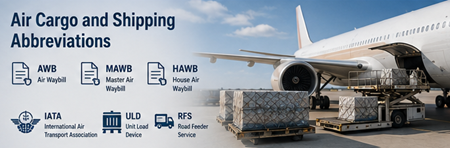
Air freight and international cargo transport use specialized abbreviations for shipping documents and airline operations.
- AWB — Air Waybill
- MAWB — Master Air Waybill
- HAWB — House Air Waybill
- IATA — International Air Transport Association
- ICAO — International Civil Aviation Organization
- ULD — Unit Load Device
- GSA — General Sales Agent
- TACT — The Air Cargo Tariff
- RFS — Road Feeder Service
- ETA — Estimated Time of Arrival
Air cargo abbreviations are widely used by freight forwarders, airports, customs brokers, and international shipping companies.
Dangerous Goods and ADR Abbreviations
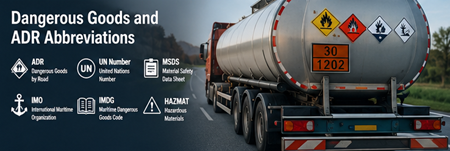
Dangerous goods transport requires strict regulations and internationally recognized abbreviations to identify hazardous materials.
- ADR — Dangerous Goods by Road Regulation
- UN Number — United Nations Dangerous Goods Identification Number
- MSDS — Material Safety Data Sheet
- IMO — International Maritime Organization
- IMDG — International Maritime Dangerous Goods Code
- RID — Dangerous Goods by Rail
- ICAO-TI — Technical Instructions for Dangerous Goods by Air
- HAZMAT — Hazardous Materials
- PG — Packing Group
- ERG — Emergency Response Guidebook
Drivers, carriers, and emergency services rely on these abbreviations to transport dangerous goods safely across Europe and internationally.
How Businesses Use Transport Abbreviations Daily
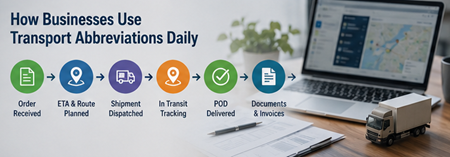
Transport abbreviations are used daily in emails, invoices, shipment updates, warehouse systems, GPS tracking, transport marketplaces, and customer communication.
- Customer creates transport request
- Dispatcher calculates ETA and transport route
- Carrier confirms FTL or LTL shipment
- Driver receives POD instructions
- Warehouse processes shipment using WMS
- Customs documents include HS codes and EORI numbers
- Tracking systems update shipment statuses automatically
- Final delivery confirmation is completed
Modern logistics systems depend heavily on abbreviations because they allow international teams to communicate quickly and efficiently regardless of language differences.
Tips for Understanding Logistics Terms Faster
If you are new to transport or logistics, learning abbreviations may seem difficult at first. However, most terms become easy to understand after regular use.
- Learn the most common abbreviations first
- Focus on terms used in your transport sector
- Read transport documents regularly
- Use logistics glossaries and guides
- Practice using terms in communication
- Learn shipment tracking statuses
- Understand Incoterms and customs basics
Over time, understanding logistics abbreviations improves operational speed, professionalism, and communication with international partners.
Conclusion
Transport abbreviations are an essential part of modern logistics and international shipping. From ETA and POD to ADR and CMR, these terms simplify communication between carriers, customers, drivers, warehouses, and customs authorities.
Whether you work in road transport, warehousing, air cargo, or freight forwarding, understanding logistics abbreviations helps you operate more efficiently and avoid costly misunderstandings.
FAQ
What does ETA mean in transport?
ETA means Estimated Time of Arrival. It indicates when a shipment or vehicle is expected to arrive at its destination.
What is POD in logistics?
POD stands for Proof of Delivery. It confirms that goods were successfully delivered to the receiver.
What does CMR mean?
CMR is the international road transport document used for cross-border freight transport in Europe.
What is the difference between FTL and LTL?
FTL means Full Truck Load where one shipment fills the truck. LTL means Less Than Truck Load where multiple shipments share truck space.
Why are transport abbreviations used?
They simplify communication, speed up logistics operations, and create standardized terminology across international transport industries.
What does ADR mean in logistics?
ADR refers to European regulations for transporting dangerous goods by road.
What is AWB in air cargo?
AWB stands for Air Waybill, which is the transport document used in air freight shipping.
What does ETD mean?
ETD means Estimated Time of Departure and shows when a shipment or vehicle is expected to leave.
eXus Dev