What Is EXW (Ex Works)? Simple Guide to International Shipping Responsibilities
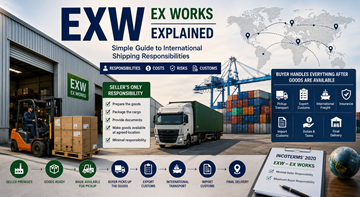
Understanding EXW is essential for importers, exporters, freight forwarders, carriers, and logistics companies involved in global transport. In this guide, we explain how EXW works, who pays transport costs, when risk transfers, and the advantages and disadvantages of using Ex Works in international shipping.
What Does EXW Mean?
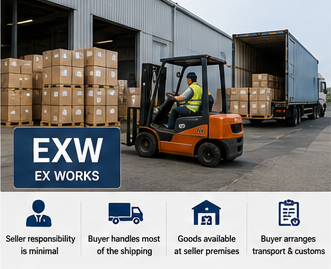
EXW stands for Ex Works. It is an international shipping term used in global trade that places most transport responsibilities on the buyer.
Under EXW, the seller only needs to make the goods available at their premises, warehouse, factory, or another agreed location. From that point onward, the buyer becomes responsible for transportation, export procedures, customs clearance, insurance, and final delivery.
- EXW = Ex Works
- Seller responsibility is minimal
- Buyer handles most logistics operations
- Used in international and European transport
- Common in factory or warehouse pickups
How EXW Works in International Shipping
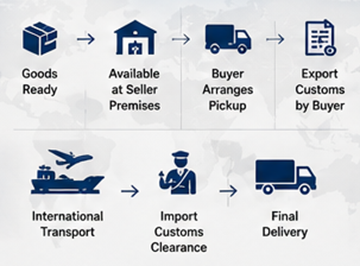
The EXW shipping process starts when the seller prepares the goods and makes them available for pickup. The buyer or the buyer’s logistics partner organizes the complete transport operation from that moment onward.
This means the buyer usually arranges loading, export customs procedures, international freight, import clearance, insurance, and delivery to the final destination.
- Seller prepares the goods
- Goods are made available at the agreed location
- Buyer arranges pickup transport
- Buyer organizes export customs procedures
- International transport is arranged
- Import customs clearance is completed
- Final delivery is organized by the buyer
Seller Responsibilities Under EXW
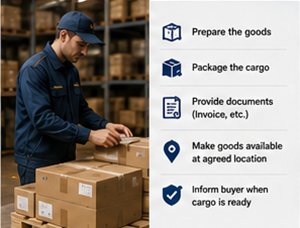
Under EXW terms, the seller has very limited obligations compared to other Incoterms.
The seller mainly prepares the goods, packaging, and commercial documents before making the cargo available for collection.
- Prepare the goods for shipment
- Package the cargo properly
- Provide commercial invoice and documents
- Make goods available at agreed location
- Inform buyer when cargo is ready
In many EXW agreements, the seller is not even required to load the cargo onto the collecting vehicle unless both parties agree otherwise.
Buyer Responsibilities Under EXW
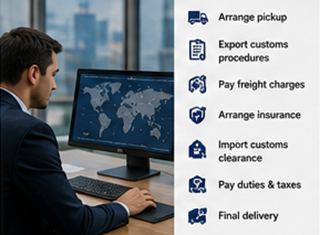
The buyer carries most responsibilities and risks under EXW shipping terms.
From pickup onward, the buyer manages nearly all logistics operations connected to the shipment.
- Arrange cargo pickup
- Organize loading if required
- Handle export customs procedures
- Pay international freight costs
- Arrange cargo insurance
- Manage import customs clearance
- Pay import duties and taxes
- Organize final delivery
When Does Risk Transfer Under EXW?
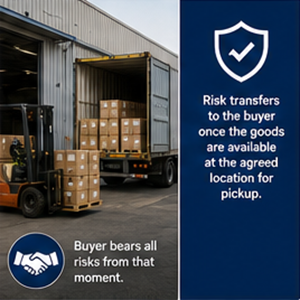
Under EXW, the risk transfers from the seller to the buyer once the goods are made available at the agreed location.
This means the buyer becomes responsible for any damage, delays, theft, or transport problems from the moment the goods are ready for pickup.
- Risk transfers very early
- Buyer carries transport risks
- Cargo insurance is highly recommended
- Transport coordination becomes important
- Warehouse pickup must be organized carefully
Who Pays Shipping Costs Under EXW?
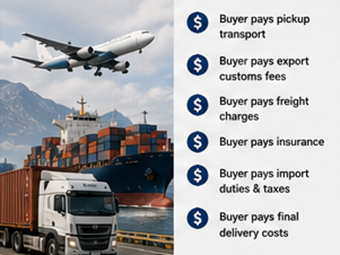
Most shipping and logistics costs under EXW are paid by the buyer.
The seller only covers costs related to preparing and packaging the goods before pickup.
- Buyer pays pickup transport
- Buyer pays export customs fees
- Buyer pays freight charges
- Buyer pays insurance costs
- Buyer pays import duties and taxes
- Buyer pays final delivery costs
EXW and Customs Clearance
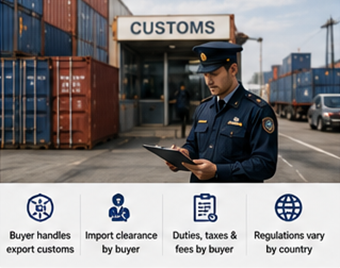
Customs procedures can become complicated under EXW because the buyer handles export formalities even in the seller’s country.
In some countries, foreign buyers may face difficulties completing export declarations directly. For this reason, some businesses prefer FCA instead of EXW for international trade.
- Buyer handles export customs
- Import procedures remain buyer responsibility
- Export declarations may require local representation
- Customs regulations vary by country
- Freight forwarders often assist with EXW shipments
Difference Between EXW and FCA
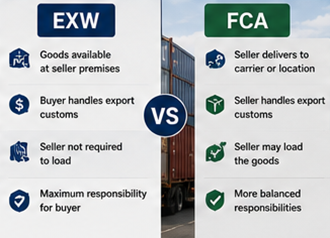
EXW and FCA are often compared because both involve pickup at or near the seller’s location.
The main difference is that under FCA, the seller usually handles export customs procedures and may load the goods onto the transport vehicle.
- EXW gives buyer maximum responsibility
- FCA gives seller more export responsibility
- FCA is often easier for international shipments
- EXW is simpler for sellers
- Both terms are common in road freight logistics
Advantages of Using EXW
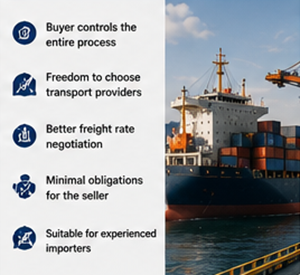
EXW can provide flexibility and transport control for experienced importers and logistics companies.
- Buyer controls transport operations
- Buyer can choose freight providers
- Seller obligations are minimal
- Suitable for experienced importers
- May improve freight negotiation opportunities
Companies with strong logistics networks often prefer EXW because they can optimize transport costs and manage shipping schedules directly.
Disadvantages of Using EXW
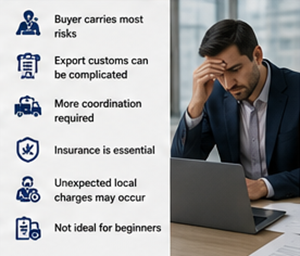
Although EXW offers flexibility, it can also create logistical and customs challenges for buyers.
- Buyer carries most transport risk
- Export customs may be difficult
- More coordination is required
- Insurance becomes essential
- Unexpected local charges may occur
- Not ideal for inexperienced importers
When Should Businesses Use EXW?
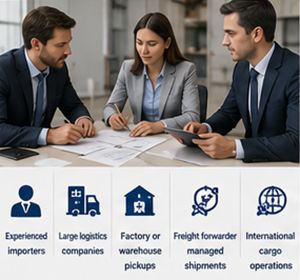
EXW is commonly used when the buyer has strong logistics experience or already works with freight forwarders and transport companies in the seller’s country.
It is often suitable for manufacturers, wholesalers, exporters, and companies managing large international transport operations.
- Experienced importers
- Large logistics companies
- Freight forwarder managed shipments
- Factory pickups
- International cargo consolidation operations
Common Mistakes When Using EXW
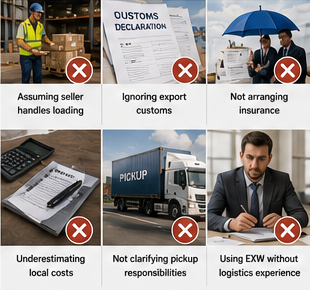
Many businesses misunderstand the responsibilities involved in EXW shipments.
- Assuming seller handles loading
- Ignoring export customs requirements
- Not arranging cargo insurance
- Underestimating local transport costs
- Failing to clarify pickup responsibilities
- Using EXW without logistics experience
EXW in European Road Transport
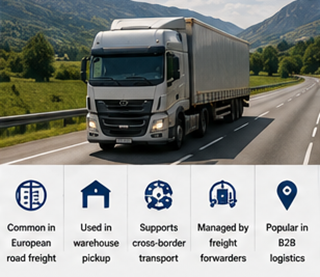
EXW is frequently used in European road transport where carriers collect cargo directly from factories, warehouses, or distribution centers.
Freight forwarders and logistics marketplaces often manage EXW transport operations across multiple European countries.
- Popular in European freight transport
- Used in warehouse pickup operations
- Common in B2B logistics
- Supports cross-border transport
- Often managed by freight forwarders
Conclusion
EXW is one of the simplest Incoterms for sellers but one of the most demanding for buyers. It places nearly all transport, customs, insurance, and delivery responsibilities on the buyer after the goods become available for pickup.
Understanding EXW helps businesses organize international shipments more efficiently, reduce misunderstandings, and manage logistics responsibilities correctly in global trade.
FAQ
What does EXW mean in shipping?
EXW means Ex Works. The seller makes the goods available at their premises, while the buyer handles most transport and customs responsibilities.
Who pays shipping costs under EXW?
The buyer usually pays pickup transport, customs procedures, freight charges, insurance, import duties, and final delivery costs.
When does risk transfer under EXW?
Risk transfers to the buyer once the goods are made available at the agreed pickup location.
Does the seller load the goods under EXW?
Not necessarily. Under standard EXW rules, the seller may not be responsible for loading unless agreed otherwise.
Is EXW good for beginners?
EXW may be difficult for inexperienced importers because the buyer handles most logistics and customs responsibilities.
What is the difference between EXW and FCA?
Under FCA, the seller usually handles export customs procedures and may load the cargo. Under EXW, the buyer carries more responsibility.
Is cargo insurance required under EXW?
Insurance is not mandatory, but it is highly recommended because the buyer carries transport risks from pickup onward.
Can EXW be used in Europe?
Yes. EXW is commonly used in European road freight and warehouse pickup logistics operations.
eXus Dev