What Is a Bill of Lading? Complete Guide to B/L in Shipping and Logistics
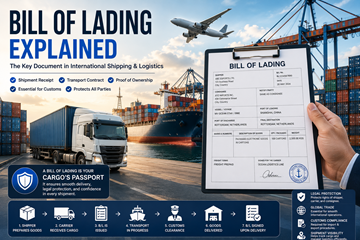
Whether you are an importer, exporter, carrier, freight forwarder, logistics company, or ecommerce business, understanding how a Bill of Lading works is essential for managing transport operations, customs procedures, and international trade documentation.
What Is a Bill of Lading?
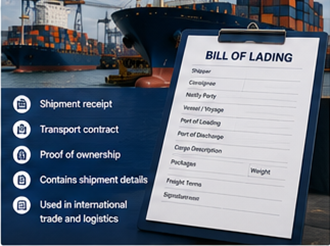
A Bill of Lading is an official transport document issued by a carrier or freight company when cargo is shipped from one location to another.
The document confirms that the carrier has received the goods and agrees to transport them to the specified destination according to the shipping agreement.
- Acts as a shipment receipt
- Serves as a transport contract
- Confirms cargo ownership
- Contains shipment information
- Used in international trade and logistics
Why Is a Bill of Lading Important?
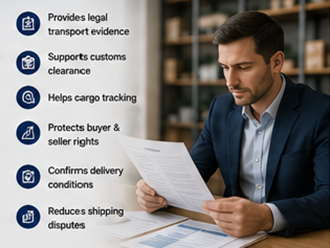
The Bill of Lading is critical because it protects all parties involved in the transport process, including shippers, carriers, freight forwarders, and buyers.
Without a proper B/L document, cargo ownership, delivery instructions, customs procedures, and transport responsibilities may become unclear.
- Provides legal transport evidence
- Supports customs clearance
- Helps cargo tracking
- Protects buyer and seller rights
- Confirms delivery conditions
- Reduces shipping disputes
How a Bill of Lading Works
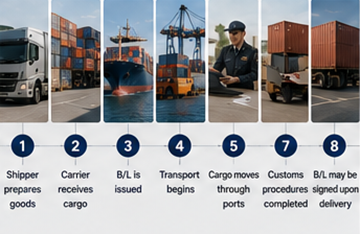
The Bill of Lading process starts when the cargo is collected by the carrier or shipping company.
The carrier issues the B/L document containing details about the shipment, transport route, cargo description, sender, and receiver.
- Shipper prepares the goods
- Carrier receives the cargo
- Bill of Lading is issued
- Transport operation begins
- Cargo moves through ports or logistics hubs
- Customs procedures are completed
- Goods are delivered to the receiver
- B/L may be signed upon delivery
Main Information Included in a Bill of Lading
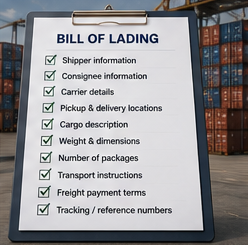
A Bill of Lading contains detailed shipment and transport information required for logistics operations and customs procedures.
- Shipper information
- Consignee information
- Carrier details
- Pickup and delivery locations
- Cargo description
- Weight and dimensions
- Number of packages or pallets
- Transport instructions
- Freight payment terms
- Tracking or reference numbers
Types of Bill of Lading Documents
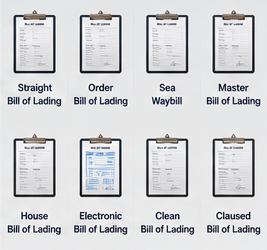
Several types of Bills of Lading are used depending on the transport method, cargo ownership structure, and shipment requirements.
- Straight Bill of Lading
- Order Bill of Lading
- Sea Waybill
- Master Bill of Lading
- House Bill of Lading
- Electronic Bill of Lading
- Clean Bill of Lading
- Claused Bill of Lading
What Is a Straight Bill of Lading?
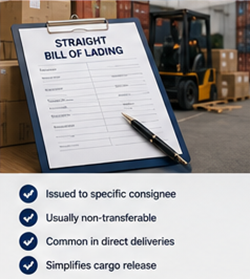
A Straight Bill of Lading is issued to a specific consignee and is generally non-transferable.
This type of B/L is commonly used when payment arrangements are already completed and the cargo is delivered directly to the named receiver.
- Issued to specific consignee
- Usually non-transferable
- Common in direct deliveries
- Simplifies cargo release
What Is an Order Bill of Lading?
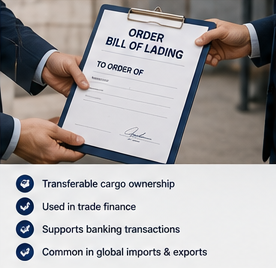
An Order Bill of Lading allows cargo ownership to be transferred to another party through endorsement.
It is commonly used in international trade finance and banking operations because ownership of the goods can change during transport.
- Transferable cargo ownership
- Used in trade finance
- Supports banking transactions
- Common in global imports and exports
What Is a Sea Waybill?
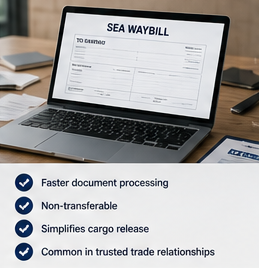
A Sea Waybill is similar to a Bill of Lading but is usually non-negotiable and does not transfer ownership rights.
Sea Waybills are often used when the buyer and seller trust each other and want faster cargo release procedures.
- Faster document processing
- Non-transferable
- Simplifies cargo release
- Common in trusted trade relationships
Master Bill of Lading vs House Bill of Lading
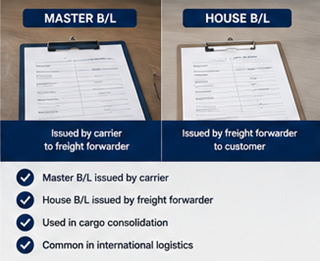
A Master Bill of Lading is issued by the main carrier to the freight forwarder, while a House Bill of Lading is issued by the freight forwarder to the customer.
These documents are common in consolidated cargo shipments managed by freight forwarding companies.
- Master B/L issued by carrier
- House B/L issued by freight forwarder
- Used in cargo consolidation
- Common in international logistics
Electronic Bill of Lading (eB/L)
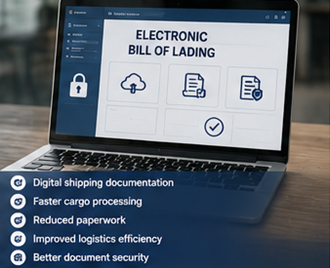
Modern logistics increasingly uses electronic Bills of Lading to simplify document handling and speed up international transport operations.
Electronic B/L systems reduce paperwork, improve cargo tracking, and support faster customs and delivery procedures.
- Digital shipping documentation
- Faster cargo processing
- Reduced paperwork
- Improved logistics efficiency
- Better document security
Bill of Lading and Customs Clearance
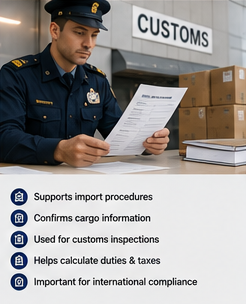
Customs authorities often require the Bill of Lading during import and export procedures.
The B/L helps customs officials verify cargo ownership, shipment details, transport routes, and goods descriptions.
- Supports import procedures
- Confirms cargo information
- Used for customs inspections
- Helps calculate duties and taxes
- Important for international compliance
Bill of Lading in Sea, Road, Air, and Rail Transport
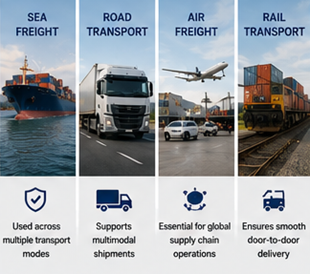
Although the Bill of Lading is strongly associated with sea freight, similar transport documents are also used in road, rail, and air cargo logistics.
- Sea freight shipping
- Road transport logistics
- Rail cargo operations
- Air freight documentation
- Multimodal transport systems
Common Problems With Bill of Lading Documents
Incorrect or incomplete Bills of Lading can create serious transport and customs issues.
- Wrong cargo description
- Incorrect consignee information
- Missing shipment details
- Customs delays
- Cargo release problems
- Transport disputes
- Freight payment misunderstandings
Advantages of Electronic Bills of Lading
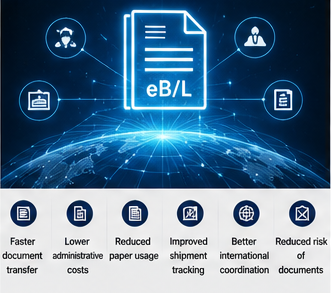
Electronic Bills of Lading are becoming increasingly popular because they improve logistics speed, transparency, and document management.
- Faster document transfer
- Lower administrative costs
- Reduced paper usage
- Improved shipment tracking
- Better international coordination
- Reduced risk of lost documents
How to Use a Bill of Lading Correctly
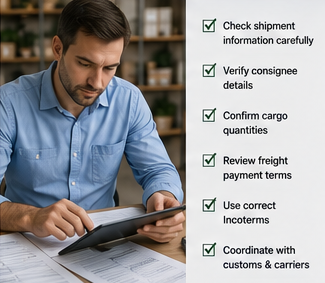
Properly preparing a Bill of Lading helps avoid delays, disputes, customs problems, and incorrect deliveries.
- Check shipment information carefully
- Verify consignee details
- Confirm cargo quantities
- Review freight payment terms
- Use correct Incoterms
- Coordinate with customs and carriers
Conclusion
The Bill of Lading is one of the most important documents in global shipping and logistics. It serves as proof of shipment, transport agreement, cargo receipt, and ownership document during international transport operations.
Understanding how Bills of Lading work helps importers, exporters, carriers, freight forwarders, and logistics companies improve shipment coordination, reduce disputes, and manage international trade more efficiently.
FAQ
What is a Bill of Lading used for?
A Bill of Lading is used as a transport contract, shipment receipt, cargo ownership document, and customs support document in international shipping.
Who issues the Bill of Lading?
The Bill of Lading is usually issued by the carrier, shipping line, or freight forwarder handling the transport operation.
Is a Bill of Lading legally binding?
Yes. A Bill of Lading serves as a legal transport document between the shipper and carrier.
What is the difference between a House B/L and Master B/L?
A Master B/L is issued by the main carrier to the freight forwarder, while a House B/L is issued by the freight forwarder to the customer.
Can a Bill of Lading be electronic?
Yes. Many logistics companies now use electronic Bills of Lading to improve speed and reduce paperwork.
What happens if a Bill of Lading contains mistakes?
Incorrect Bills of Lading may cause customs delays, cargo release issues, delivery problems, and legal disputes.
Is a Bill of Lading required for customs?
In most international shipments, customs authorities require a Bill of Lading or similar transport documentation.
What transport modes use Bills of Lading?
Bills of Lading are commonly used in sea freight, road transport, rail cargo, air freight, and multimodal logistics operations.
eXus Dev